Rehab Articles

What is an intervention? An intervention is a professional process used in order to make the individual with the problem face reality and admit that they need help. It is a meeting where friends and family address the ways that the alcohol or drug use by the individual affects everyone who cares about the person.
Why does substance abuse treatment need to be arranged ahead of time? The goal of this type of meeting is to get the individual to see that they have a problem and they need help. The chance of successful treatment and a full recovery are highest when the individual goes directly from the intervention into the treatment program. If there is any delay the individual could retreat back into denial and then refuse to go later on.
Why is a professional needed for an intervention? Professional assistance should always be used for an intervention. Friends and family members who have been negatively affected by the substance abuse may have some deep emotions that can include anger and resentment. Without a professional present the meeting can quickly turn ugly and escalate into something negative instead of having a positive influence that leads to change.
What role will friends and family members play in this process? Each person who will attend the intervention will usually be asked to draw up a letter to the target of the meeting. This letter should detail how substance abuse has caused harm to the family member or friend. During the meeting each individual will address the person at the center of the intervention in the hope that this individual will be willing to accept treatment.
Rehab Articles

1. Discuss the problem with your family member. Any addiction is a cause for concern, and some may be deadly as well as devastating every aspect of daily life. If your loved one admits that there is a problem then professional treatment can be sought. If the individual is in denial then additional efforts may be necessary.
2. Arrange for substance abuse treatment and then present this as a fact to your loved one. It may be more difficult for them to refuse help when this is presented as a fact and the arrangements are already in place.
3. Do not enable your loved one with the addiction. We often want to take care of those that we love, and to make things easier for them. If you enable the substance abuse you are not helping your family member and you could make things worse instead of fixing it for them.
4. Arrange for an intervention. This step may help bring your loved one to their senses and make them realize what their addiction is doing to those close to them that they care about. Often the individual will not be honest about the complications that their drug or alcohol use has on others until an intervention is performed.
5. Seek professional assistance from your family physician. Discuss your substance abuse concerns and brainstorm with your physician about how to get your family member the help that they need and deserve. The physician may be able to come up with solutions that you have not considered up until this point.
Rehab Articles
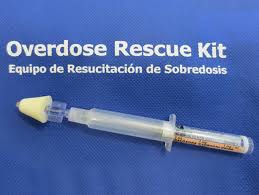
Research shows that ER visits can lower the rate of opioid deaths by providing overdose education and rescue kits. Emergency Departments across North America have an opportunity to educate patients who come through and provide a rescue kit in case an opioid overdose occurs. Early intervention can often mean the difference between an overdose that causes death and an overdose which is survived. In 1999 the number of opioid overdose deaths was 4,041. By 2010 this number had reached a staggering 16,651 people. Nasal naloxene rescue kits can be provided to patients and their families along with information about how to respond during an overdose situation. In 2011 there were an estimated 420,040 visits to emergency rooms related to an overdose of opioid drugs, and 258,482 overdose cases which involved heroin.
ER visits for possible overdose of opioids, and the number of opioid deaths, can be lowered when patients are provided with the right information and the rescue kit which can start to reverse an overdose before help can arrive. In many cases by the time that rescue personnel arrive it is too late because of how fast an overdose death can occur. When loved ones are taught the signs of an overdose and they understand what steps to take and how to use a naloxene rescue kit the odds of the individual surviving the opioid overdose are greatly increased. Many opioid deaths could be prevented if the medical resources and knowledge is available to those who are on hand when an overdose happens. Many police agencies and other first responders are also being trained and receiving the rescue kits as well.
Rehab Articles

A new study by Case Western Reserve has shown that social activities may help with relapse prevention from teen substance abuse. The right social activities can help addicted teens recover and make a successful transition back into the real world. The study was performed by Maria Pagano, Ph.D., a professor of psychiatry, and it involved a group of around 200 teens who had been admitted for residential substance abuse treatment in the northeastern part of the USA. The adolescents involved in the study had displayed moderate to severe social anxiety issues for a year or more before the teen substance abuse started. Around 42% of the participants studied admitted to severe social fears, and around 15% of the study participants met the criteria for a diagnosis of social anxiety disorder.
Professor Pagano discussed the study on relapse prevention and teen substance abuse, saying “Drinking and drug use relieved a pervasive sense of not fitting in for many youths addicted to alcohol and illicit drugs, and hypersensitivity to criticism is common. The incidence of higher rates of heroin use among young adults living in this region is distressing. A sense of belonging is important to live sober and to thrive, and 12-step service offers a venue for those impaired by social anxiety. Low-intensity service is a more gentle way for youths to feel like they belong and to connect with other people who are facing similar challenges. Getting active in helping others through AA motivates them to stay long enough to benefit from other AA activities and increase their chances of turning their life around toward a positive life trajectory.”
Rehab Articles

An accurate diagnosis can be difficult when it comes to bipolar disorder, and there are a few subtypes within this disorder as well. The 3 main subtypes of this condition and the main characteristics of each subtype include:
-
Bipolar I Disorder- This is also referred to as a mixed episode or simply mania. Usually individuals who have this sub category of bipolar disorder will experience the lows of depression along with the highs of mania. This category can include symptoms which can become very severe at times, and the condition can be devastating and take years for proper management and recovery.
-
Bipolar II Disorder- This sub category may also be called hypomania and depression. These individuals do not experience manic episodes which are full blown and out of control, although they may exhibit some signs of the manic phase of the mental disorder. Severe depression is one of the most dangerous symptoms when an individual has this type of bipolar disorder and there is an accurate diagnosis.
-
Cyclothymia- This sub category involves mild depression and hypomania, so the symptoms of both phases are not as severe or life changing. The mood swings and emotional changes experienced by these individuals are usually cyclical in nature.
Someone who has been diagnosed with bipolar disorder, regardless of the sub category used in the accurate diagnosis, can experience difficulty in every area of life. School, work, home, and relationships can all be damaged as a result of the mental disorder. With the proper treatment this condition can be managed and the individual can lead a full and productive life once more.
Rehab Articles

Everyone has mood swings, and some may experience these with greater frequency or severity than others, but when do these ups and downs qualify as bipolar disorder? The difference between the usual highs and lows of life and this mental disorder is the severity and the frequency of the changes. Someone who has bipolar disorder will go from deeply depressed to being euphoric and full of energy, and treatment usually consists of mood stabilizer drugs in order to minimize the swing of the emotional pendulum. In order to be diagnosed with a mental disorder the episodes of unusual thoughts and behaviors usually must last days at least. Everyone is going to be somewhat depressed when certain negative events occur, and we would all be full of energy and excitement if we won a large amount of money in the lottery.
If you or someone you know suffers from severe mood swings and you are concerned that the problem may be bipolar disorder then there are a few things you can do. Start keeping a journal of your feelings, emotions, and activities. Record when you start to get low or when you seem to be full of energy and have an inflated sense of self esteem. This will help any mental health professionals that you consult for treatment come up with an accurate diagnosis of the conditions involved. If depression or the other extreme seem to create problems in your life then mental health treatment should be sought. Whether it is just severe mood swings or bipolar depression there is help available if you are just willing to reach out and ask for it.