Rehab Articles

1. If you need help for problems with drugs or alcohol abuse then the first place that you need to look is your health insurance coverage. Some policies will cover specific types of methods or certain facilities or programs. Be prepared though, because there are many policies which do not provide effective treatment in this area.
2. If you do not have health insurance and you need substance abuse treatment then there may be state and government programs which may help pay for this type of help. Do some research and determine which government programs you may be eligible for and then apply to these programs.
3. Ask friends and family for financial help. No wants wants to ask for money but your recovery needs to be the top priority at this point. Most family members and close friends will want to help you get better, and you may be surprised at how fast you can afford effective treatment when the cost is spread out among several people.
4. If you do not have health insurance coverage then there may be charitable organizations which offer treatment for drug or alcohol abuse or who will help to pay the cost for another facility or program. Check out which charities help with this type of need in your community and then contact these organizations.
5. If you can not afford inpatient substance abuse treatment there are free programs n an outpatient basis that can be used. Many AA and NA groups hold daily meetings which do not have any cost to attend. Outpatient counseling may also be offered at a reduced cost or even free of charge.
Rehab Articles

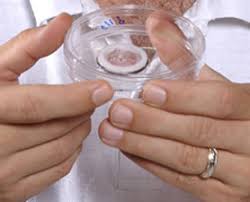
For many people the idea of a breath test for illegal drug use may seem like something from a futuristic science fiction movie, but scientists have developed this technology and it will soon become available to replace the urine analysis that is so common for drug testing right now. Many view a urinalysis as invasive and a privacy violation, while a breath test is far less intrusive and does not cause embarrassment during the specimen collection process. According to the scientists who developed the new test for and detect heroin, cocaine, marijuana, amphetamines, and methamphetamines just from your breath. The latest testing technology uses liquid chromatography-mass spectrometry, and it is very sensitive. The study results can be found in the Journal of Chromatography B, in the March 15 2015 edition.
The breath test for illegal drug abuse utilizes the aerosol particles that are exhaled in the breath. According to Karolinska Institute in Sweden professor and study researcher Olof Beck “These aerosol particles may become contaminated with drugs present in the body, which enables drugs to be highlighted. A simple collection device is currently available which selectively collects the micrometer aerosol particles on a filter and enables further laboratory investigation of possible drug content.” The availability of a breath test for illegal drug abuse also has another potential application. Patients who are on certain medications can be tested to ensure that they are in compliance and these drugs are not being sold on the street to others. Roadside checks may involve testing drivers for drugs as well as alcohol in the near future as this technology becomes widely available.
Rehab Articles

Could a pill be developed that boosts empathy by altering brain chemistry? According to a new research study this could be possible at some point in the future. The research suggests that the sensitivity to inequality that we have is influenced by the neurochemical balance in our brain, and changing the neurochemistry could induce more empathy in people. The medical study was performed at the University of California, Berkeley and the University of California, San Francisco. When a drug which causes prefrontal cortex neurochemical changes was given the level of empathy and fairness felt was increased. This was seen by the increased willingness to engage in and exhibit prosocial behaviors. Additional research is still needed, but the hope is that new diagnostic tools and treatments can be developed to treat individuals with conditions that cause low empathy for others.
The medical study on empathy and brain chemistry is important, because many mental disorders can impact empathy and this may be due to neurochemical changes that occur when the mental disorder starts to develop. University of California, Berkeley’s Haas School of Business assistant professor and co-principal investigator Ming Hsu said “Our study shows how studying basic scientific questions about human nature can, in fact, provide important insights into diagnosis and treatment of social dysfunctions.” Andrew Kayser, University of California, San Francisco assistant professor of neurology and a co-principal study investigator, explained “Our hope is that medications targeting social function may someday be used to treat these disabling conditions.”
Rehab Articles
A new scientific study on rats, specifically on the brains of rats, suggest that being exposed to lead may be a contributing factor to schizophrenia onset. The study was performed at the Mailman School of Public Health at Columbia University, and a study description was published in the Translational Psychiatry journal. There were many similarities between the brains of rats and the brains of humans with schizophrenia when rats were exposed to lead before birth an during the early postnatal period. Lead, a heavy metal which can cause damage in small amounts or even be toxic in larger amounts, has a detrimental effect on the brain in three specific areas which are implicated in schizophrenia. These brain areas were the striatum, the medial prefrontal cortex, and the hippocampus.
The scientific study on rat brains exposed to lead also showed that lead can mimic other brain changes in schizophrenia. According to senior study author Tomás Guilarte, Ph.D. “The similarities in the brain structure and neuronal systems between what we see in lead-exposed rats and human schizophrenia patients are striking, and adds to a growing body of literature suggesting that early lead exposure primes the brain for schizophrenia later in life.” First study author Kirstie Stansfield, Ph.D, explained
“We are currently assessing the impact of lead exposure on both the rewarding and reinforcing properties of addictive drugs like cocaine while exploring the biological underpinnings of how lead exposure plays a role in addiction.” The study results could lead to additional studies to determine just how much lead is necessary before the onset of schizophrenia is triggered in a person.
Rehab Articles
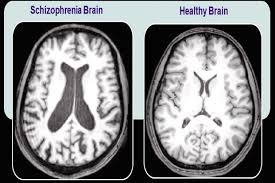
Schizophrenia, a serious and sometimes extremely devastating mental disorder, is a condition that has no cure right now. Thanks to advances in modern medicine and imaging technology scientists today know that people who suffer from schizophrenia tend to have brain function that is abnormal in certain respects. Imaging scans of those with the mental disorder and with control scans from patents who have no mental illness show that different areas of the brain are active in those who have schizophrenia. People who have this condition may suffer from chemical imbalances with neurotransmitters, complex chemicals that allow communication between brain cells and chemical systems in the brain and body. Some scientists believe that the neurotransmitters glutamate and dopamine may be involved in schizophrenia but this is still being tested and is not proven yet.
In addition to differences in brain function many people with schizophrenia also have abnormalities in the structure of the brain. When images of normal and schizophrenic brains are compared there are small but very discernible differences in the structure of the brain. It is important to note that some with schizophrenia may not have these physical abnormalities in the brain structure, and some without this condition may also have the same structural abnormalities though. This means that simply looking at brain scans can not predict who will develop the condition. Some neurobiologists theorize that schizophrenia may result from inappropriate connections which are formed by neurons in the fetal brain, and these are activated during puberty when the drastic brain changes that occur during this growth phase affect the faulty connections.
Rehab Articles
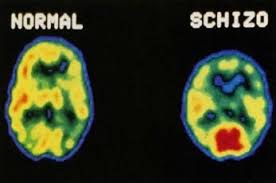
Schizophrenia is a form of mental disorder that can be very serious, and it is usually treated with medications and other treatment methods but there is no cure right, and it is a typically life long condition for anyone who is diagnosed with this type of mental disorder. The medical community has noted that this form of mental illness tends to run in families and that shows that genetics play a role, but there are also environmental factors that may be involved as well. Medical science is not yet able to predict which adolescents and young adults will develop this mental condition and which groups will never display any symptoms of schizophrenia, even with advancements in genetics today. Some people with long family histories of mental illness may never display any signs, while others may not have any family history of mental disorders and yet become schizophrenic.
There is some speculation that schizophrenia is affected just as much by environmental factors as this condition is by genetics, if not more so. Right now medical science believes that this mental disorder is a result of many influences, and there is not a single gene mutation or defect that causes this condition. There are several genes which are thought to raise the risk of developing schizophrenia, and people diagnosed with this disorder do tend to have rare genetic mutations at higher rates. The mutations involved can be one of hundreds of different genes, and it is suspected that the genetic mutations have a disruptive impact on normal brain development.