Rehab Articles

According to a recent large scale analysis by University College London researchers there is a proven link between the hours worked, chronic stress, and coronary heart disease. The analysis was published in The Lancet journal. When the researchers performed a comprehensive review and a meta analysis of previous published studies and studies which have not been published it became clear very quickly that working more hours each day and week had an effect on cardiovascular disease. In fact the researchers found that an individual who puts in 55 hours or more at work each week had a 33% increase in their risk of developing coronary heart disease when they were compared to individuals . The analysis showed that the more hours an individual worked the higher their risk of having a stroke or developing coronary heart disease was.
The lead researcher on the analysis between hours worked, chronic stress, and coronary heart disease was epidemiology professor Mika Kivimäki, Ph.D. Kivimäki explained “The pooling of all available studies on this topic allowed us to investigate the association between working hours and cardiovascular disease risk with greater precision than has previously been possible. Health professionals should be aware that working long hours is associated with a significantly increased risk of stroke, and perhaps also coronary heart disease.” These findings should be a wake up call for individuals, employers, and medical professionals alike. The analysis findings were consistent across all areas. This consistency was seen even after the various risk factors including sex, age, and socioeconomic status were taken into account.
Rehab Articles

A new research study on chronic stress in teens had results that some may find surprising. Many teens are already burned out from chronic stress before they even leave high school, and this stress just gets even worse as they move on to college. According to New York University College of Nursing senior research scientist Noelle Leonard, Ph.D. “School, homework, extracurricular activities, sleep, repeat —that’s what it can be for some of these students. We are concerned that students in these selective, high pressure high schools can get burned out even before they reach college. The Charles Engelhard Foundation is interested in the issue of college engagement, and funded us to explore whether the roots of disengagement reach back as far as high school. We found that indeed they do.”
Chronic stress in teens can lead to disengagement or even mental health issues for emerging adults according to the research study. Principal Investigator for the study, Marya Gwadz, Ph.D., said “While there is no doubt students in selective public high schools also experience high rates of chronic stress, we decided to study the private school setting, which has been under-studied compared to public institutions.” The study involved four phases, and the results were published in Frontiers in Psychology. There are some who believe tat all students today have much more stress than they did in the past, and far fewer hours each week just to be kids or teenagers. Do you think that teens today have too much chronic stress? Why or why not?
Rehab Articles

New research has many experts calling for mental health and substance abuse benefit integration for children and adolescents. These problems are delivered most effectively through the primary medical care setting, and that is especially true with younger age groups like children and adolescents. Researchers from the University of California, Los Angeles have confirmed that this is the most beneficial relationship. According to the researchers integrating mental health and substance abuse benefits into the primary care model improved outcomes by as much as 66% for children and adolescents. UCLA professor of psychiatry and biobehavioral sciences, lead study author, and UCLA Youth Stress and Mood Program director Joan Asarnow, Ph.D. explains “The take-home message is that integrated care works. Kids and teens do better than they otherwise would. That’s promising because we have a huge mental health problem in this country.”
Dr. Lonnie Zeltzer, UCLA distinguished professor of pediatrics, anesthesiology, psychiatry, and biobehavioral sciences and a study co-author, discussed the integration of mental health and substance abuse into primary care models for children and adolescents. “The old model has been that if your child has a medical problem, he or she goes to the pediatrician. But mental health was often not addressed, or if it was, patients were referred to a mental health specialist, and the child’s health insurance determined whether or not the child had access to the mental health specialist as well as the quality of that care. Children of poorer families lost out.” Asarnow also stated “Integrated approaches bring mental health care to a setting where kids already are, reducing barriers to mental health care such as stigma or the practical complications of shifting to a different care setting.”
Rehab Articles
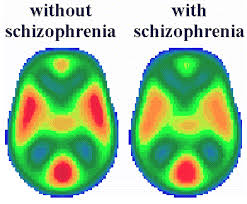
Brain imaging holds the key to why healthy siblings of schizophrenia patients avoid this disorder. The researchers n the latest study have found important differences in brain development during adolescence between those with schizophrenia and siblings who are healthy and do not have this mental disorder. The study showed that the healthy siblings experienced brain abnormalities similar to their schizophrenic siblings, but in the brain of the healthy sibling the brain development normalized and caught up with the development of normal teens without any indication of schizophrenia. Researchers hope that the latest brain imaging results and findings could open up new treatment possibilities. A partnership between researchers from the National Institute of Mental Health in Washington, D.C and the University of Melbourne in Australia made the study possible.
The brain imaging schizophrenia study used magnetic resonance imaging (MRI) technology to map out the brain development and patterns of 109 individuals who developed childhood-onset schizophrenia between the age of 12 and 24 years old. According to University of Melbourne electrical engineer and lead researcher Dr. Andrew Zalesky “We’ve looked at the development of brain networks over the adolescent period, from childhood to early adulthood. Abnormalities detected early in the unaffected children normalize by age 16. So why are these brothers and sisters able to overcome the risk? Looking for these biological factors that protect a person from developing schizophrenia opens up a new direction in the search for treatments.” According to Melbourne Neuropsychiatry Centre at the University of Melbourne Dr. Christos Pantelis, a co-author of the recent research study, “New generation medications can help young patients manage their symptoms, but can have significant side effects. Our work has the potential to open up avenues towards earlier intervention with fewer side-effects that improve a child’s resilience to becoming ill. This is an interesting new direction, as it suggests the search for targeted psychiatric treatments for schizophrenia and psychosis requires following young people over time.”
Rehab Articles

Is an addiction to sexting becoming a big problem in North America? A new study shows that sexting is more common than what was previously thought, with more than 80% of the people who responded to online surveys admitted that they had engaged in sexting in the last year. The research behind these facts was presented at the 123rd Annual Convention for the American Psychological Association. The research was presented to the convention by Drexel University’s Emily Stasko, MS, MPH. Stasko explained that “Given the possible implications, both positive and negative, for sexual health, it is important to continue investigating the role sexting plays in current romantic and sexual relationships. This research indicates that sexting is a prevalent behavior that adults engage in for a variety of reasons. These findings show a robust relationship between sexting and sexual and relationship satisfaction.”
An addiction to sexting is possible, but this behavior can also play a role in healthy sexual relationships as well. The study involved 870 individuals who were between 18 and 82 years old. Researchers also discovered that many individuals who sexted more often had a higher satisfaction level and rating for their relationship when they were sending these messages to their significant other. When sexting occurs outside of a monogamous relationship it can be harmful to the relationship though. Many experts consider this activity as risky, although many people who engage in sexting view the activity as something fun and harmless. As this activity grows there well be more people who develop an addiction to this risk taking behavior and need treatment.